


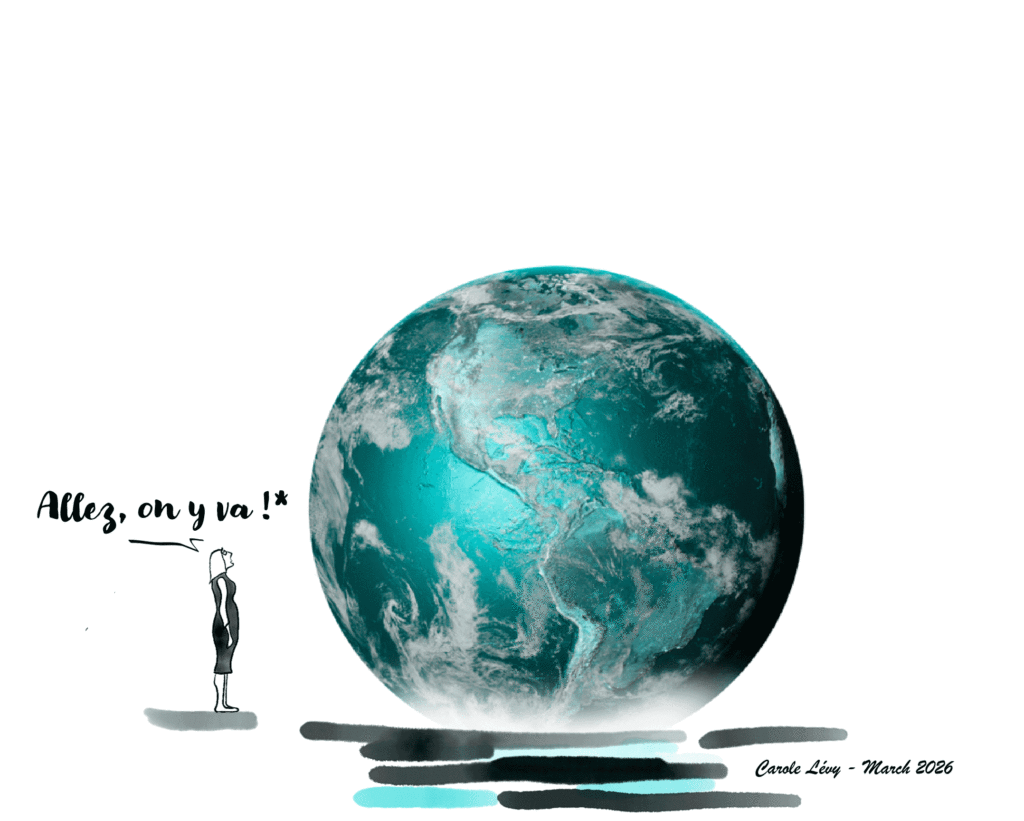
We live in a moment that tests what we believe about leadership.
The world around us is noisy with a kind of power that is impulsive, transactional, and contemptuous of the slow, humble and delicate work of building trust. It is easy, in that context, to retreat — numb, stay in the safe perimeter of doing what we know, and wait for better conditions.
What can we do? Show up when we can.
Showing up is not about conditions. It is a choice we make despite them, despite fears, moved by a commitment to live in integrity with our goals and values.
Last month, I replaced a colleague for a team facilitation she couldn’t do. A significant firm had just gone through a major reorganization and wanted to gather its partners and executive leaders in a retreat — to reflect, and work on their collaboration across offices. I had less than a week to prepare.
A last-minute replacement is both risky and stimulating. I accepted because the challenge was exactly the kind I care about: helping an organization foster a culture of learning and collaboration when its most talented people have built their success, identity, and sense of self-worth on being independent, in charge and “expert-in-the-room.”
I also accepted because of a promise I made to myself, a long time ago, that I would not avoid engaging in the world out of fear of being judged. When it is time to show up, I show up.
I am an anxious performer with a terrible stage fright, who loves performing. Ugh.
Part of the material I was asked to facilitate was an exercise I hadn’t used before — a game designed to provoke reactions in participants without their full awareness, so that the debrief could reveal their counterproductive tendencies and areas to work on. The concept was interesting. But something about it made me very uncomfortable in ways I couldn’t fully articulate at the time. I channeled that unease into obsessive preparation: rehearsing every word, mapping every choreographic detail, trying to control what couldn’t be controlled.
I had assumed the game would take place in a conference room.
It took place outside, on an enormous terrace overlooking the ocean. No tables — just fire pits, comfortable sofas, and participants who had just arrived, excited to reconnect with colleagues and ready for cocktails. Hotel guests watched from the lounge above. It was getting dark. It was getting cold.
There are moments when you could walk away without losing your dignity. This was one of them. The conditions were, by any reasonable measure, not ideal.
I had little to lose, and everything to gain by trying. So, I gave everything I could. We moved furniture around to reorganize the space. I played my role as a strict facilitator; they played the game, puzzled. It was chaotic. The debrief that I shortened – a good call – offered a few insights. Something was planted, even if it didn’t fully bloom that evening. That was good enough.
The next day was long — my session was last in the agenda, following a four-hour session led by another facilitator. I was an observer; it was good, but I lost my energy several times, wondering if the group would be open to the vulnerable and personal work I was about to lead. When it was my turn, I regrouped body, mind and spirit and showed up again. So did the participants. They named things that were real: a cultural tendency toward judgment and cynicism that was quietly undermining their safety and their ability to work together. I want to believe that kind of honesty doesn’t happen by accident. It’s the positive domino effect of showing up.
Later, reflecting on my anxiety during the preparation, I had a aha. The fear wasn’t only about performance. It was also about my core values: misleading participants, even for the sake of learning, was going against my sense of integrity and usual way of facilitating with transparency and authenticity.
We don’t always understand our experiences in the moment — and that’s all right. We don’t always have the words either and we can’t always trust the thoughts in our brain. But we show up anyway. We hold onto our purposes, stay close to what we believe, and seize opportunities — imperfectly, anxiously, fully.
And every morning, as we look at the world, we say out loud: “Allez, on y va !”